

Tapeworm infection - hymenolepis
Hymenolepiasis; Dwarf tapeworm infection; Rat tapeworm; Tapeworm - infectionA hymenolepis infection is an infestation by one of two species of tapeworm: Hymenolepis nana or Hymenolepis diminuta. The disease is also called hymenolepiasis.
Causes
Hymenolepis worms live in warm climates and are common in the southern United States. Insects eat the eggs of these worms.
Humans and other animals become infected when they eat material contaminated by insects (including fleas associated with rats). In an infected person, it is possible for the worm's entire life cycle to be completed in the bowel, so infection can last for years.
Hymenolepis nana infections are much more common than Hymenolepis diminuta infections in humans. These infections used to be common in the southeastern United States, in crowded environments, and in people who were confined to institutions. However, the disease occurs throughout the world.
Symptoms
Symptoms occur only with heavy infections. Symptoms include:
- Diarrhea
- Gastrointestinal discomfort
- Itchy anus
-
Poor appetite
Poor appetite
A decreased appetite is when your desire to eat is reduced. The medical term for a loss of appetite is anorexia.
 ImageRead Article Now Book Mark Article
 -
Weakness
Weakness
Weakness is reduced strength in one or more muscles.
 ImageRead Article Now Book Mark Article

Exams and Tests
A stool exam for the tapeworm and its eggs confirms the diagnosis.
Stool exam
Stool ova and parasites exam is a lab test to look for parasites or eggs (ova) in a stool sample. The parasites are associated with intestinal infec...

Treatment
The treatment for this condition is a single dose of praziquantel, repeated in 10 days.
Household members may also need to be screened and treated because the infection can be spread easily from person to person.
Outlook (Prognosis)
Expect full recovery following treatment.
Possible Complications
Health problems that may result from this infection include:
-
Abdominal discomfort
Abdominal discomfort
Abdominal pain is pain that you feel anywhere between your chest and groin. This is often referred to as the stomach region or belly.
 ImageRead Article Now Book Mark Article
 -
Dehydration from prolonged diarrhea
Dehydration
Dehydration occurs when your body does not have as much water and fluids as it needs. Dehydration can be mild, moderate, or severe, based on how much...
 ImageRead Article Now Book Mark Article
When to Contact a Medical Professional
Contact your health care provider if you have chronic diarrhea or abdominal cramping.
Prevention
Good hygiene, public health and sanitation programs, and elimination of rats help prevent the spread of hymenolepiasis.
References
Fairley JK, O’Connell EM. Tapeworms (cestodes). In: Blaser MJ, Cohen JI, Holland SM, et al, eds. Mandell, Douglas, and Bennett's Principles and Practice of Infectious Diseases. 10th ed. Philadelphia, PA: Elsevier; 2026:chap 295.
Fischer PR, White AC. Adult tapeworm infections. In: Kliegman RM, St. Geme JW, Blum NJ, et al, eds. Nelson Textbook of Pediatrics. 22nd ed. Philadelphia, PA: Elsevier; 2025:chap 348.
White AC, Brunetti E. Cestodes. In: Goldman L, Cooney KA, eds. Goldman-Cecil Medicine. 27th ed. Philadelphia, PA: Elsevier; 2024:chap 325.
-
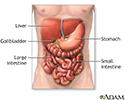
Digestive system organs - illustration
The digestive system organs in the abdominal cavity include the liver, gallbladder, stomach, small intestine and large intestine.
Digestive system organs
illustration
Review Date: 8/5/2025
Reviewed By: Jatin M. Vyas, MD, PhD, Roy and Diana Vagelos Professor in Medicine, Columbia University Vagelos College of Physicians and Surgeons, Division of Infectious Diseases, Department of Medicine, New York, NY. Also reviewed by David C. Dugdale, MD, Medical Director, Brenda Conaway, Editorial Director, and the A.D.A.M. Editorial team.
 All rights reserved.