Pulicosis; Dog fleas; Siphonaptera DefinitionFleas are small insects that feed on the blood of humans, dogs, cats, and other warm-blooded animals. CausesFleas prefer to live on dogs and cats. They may also be found on humans and other warm-blooded animals. Pet owners may not be affected by fleas until their pet has been gone for a period of time. Fleas look for other sources of food and begin to bite humans. SymptomsBites often occur on the legs and places where clothes fit close to the body, such as the waist, buttocks, thighs, and lower abdomen. Symptoms of flea bites include:
Exams and TestsUsually, a diagnosis can be made when your health care provider examines the skin where the bites are. Questions may be asked about contact with animals such as cats and dogs. In rare cases, a skin biopsy is done to check for other skin problems. TreatmentYou can use an over-the-counter 1% hydrocortisone cream to relieve itching. Antihistamines you can take by mouth may also help with itching. Possible ComplicationsScratching can lead to a skin infection. Fleas can carry bacteria that cause diseases in humans, such as typhus and plague. The bacteria can be transmitted to humans by flea bites. PreventionPrevention may not always be possible. The goal is to get rid of the fleas. This can be done by treating your home, pets, and outside areas with chemicals (pesticides). Small children should not be in the home when pesticides are being used. Birds and fish must be protected when chemicals are sprayed. Home foggers and flea collars do not always work to get rid of fleas. Always consult your veterinarian for help. ReferencesBurkhart CN, Burkhart CG, Morrell DS. Infestations. In: Bolognia JL, Schaffer JV, Cerroni L, eds. Dermatology. 5th ed. Philadelphia, PA: Elsevier; 2025:chap 84. Dinulos JGH. Infestations and bites. In: Dinulos JGH, ed. Habif's Clinical Dermatology. 7th ed. Philadelphia, PA: Elsevier; 2021:chap 15. James WD, Elston DM, Treat JR, Rosenbach MA, Neuhaus IM. Parasitic infestations, stings, and bites. In: James WD, Elston DM, Treat JR, Rosenbach MA, Neuhaus IM, eds. Andrews' Diseases of the Skin: Clinical Dermatology. 13th ed. Philadelphia, PA: Elsevier; 2020:chap 20. | ||
| ||
Review Date: 10/13/2024 Reviewed By: Ramin Fathi, MD, FAAD, Director, Phoenix Surgical Dermatology Group, Phoenix, AZ. Also reviewed by David C. Dugdale, MD, Medical Director, Brenda Conaway, Editorial Director, and the A.D.A.M. Editorial team. The information provided herein should not be used during any medical emergency or for the diagnosis or treatment of any medical condition. A licensed medical professional should be consulted for diagnosis and treatment of any and all medical conditions. Links to other sites are provided for information only -- they do not constitute endorsements of those other sites. No warranty of any kind, either expressed or implied, is made as to the accuracy, reliability, timeliness, or correctness of any translations made by a third-party service of the information provided herein into any other language. © 1997- A.D.A.M., a business unit of Ebix, Inc. Any duplication or distribution of the information contained herein is strictly prohibited. | ||
A.D.A.M. content is best viewed in IE9 or above, Firefox and Google Chrome browser. |


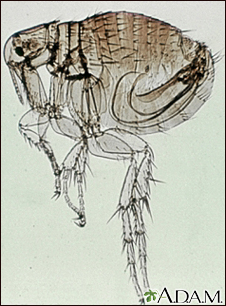 Flea
Flea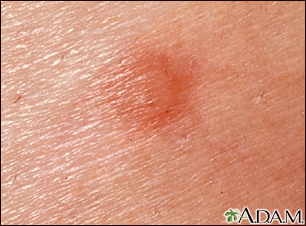 Flea bite - close-...