

Chronic granulomatous disease
CGD; Fatal granulomatosis of childhood; Chronic granulomatous disease of childhood; Progressive septic granulomatosis; Phagocyte deficiency - chronic granulomatous diseaseChronic granulomatous disease (CGD) is an inherited disorder in which certain immune system cells do not function properly. CGD is characterized by repeated and severe infections.
Causes
In CGD, immune system cells called phagocytes are unable to kill some types of bacteria and fungi. This disorder leads to long-term (chronic) and repeated (recurrent) infections. The condition is often discovered very early in childhood. Milder forms may be diagnosed during the teenage years, or even in adulthood.
Chronic
Chronic refers to something that continues over an extended period of time. A chronic condition is usually long-lasting and does not easily or quick...

Risk factors include a family history of recurrent or chronic infections.
About half of CGD cases are passed down through families as a sex-linked recessive trait. This means that boys are more likely to get the disorder than girls. The variant gene is carried on the X chromosome. Boys have 1 X chromosome and 1 Y chromosome. If a boy has an X chromosome with the variant gene, he may inherit this condition. Girls have 2 X chromosomes. If a girl has 1 X chromosome with the variant gene, the other X chromosome may have a working gene to make up for it. A girl must inherit the variant X gene from each parent in order to have the disease.
Sex-linked recessive trait
Sex-linked diseases are passed down through families through one of the X or Y chromosomes. X and Y are sex chromosomes. Dominant inheritance occur...

Symptoms
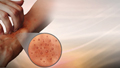
CGD can cause many types of skin infections that are hard to treat, including:
- Blisters or sores on the face (impetigo)
Impetigo
Impetigo is a common infection of the outermost layer of the skin.
 ImageRead Article Now Book Mark Article
 -
Eczema
Eczema
Atopic dermatitis is a long-term (chronic) skin disorder that involves scaly and itchy rashes. It is a type of eczema. Other forms of dermatitis inc...
 ImageRead Article Now Book Mark Article
 - Growths filled with pus (abscesses)
Abscesses
An abscess is a collection of pus in any part of the body. In most cases, the area around an abscess is swollen and inflamed.
 ImageRead Article Now Book Mark Article
 - Pus-filled lumps in the skin (boils)
Boils
A boil is an infection that affects groups of hair follicles and nearby skin tissue. Related conditions include folliculitis, an inflammation of one ...
 ImageRead Article Now Book Mark Article
CGD can also cause:
- Persistent diarrhea
-
Swollen lymph nodes in the neck
Swollen lymph nodes
Lymph nodes are present throughout your body. They are an important part of your immune system. Lymph nodes help your body recognize and fight germ...
 ImageRead Article Now Book Mark Article
 - Lung infections, such as pneumonia or lung abscess
Exams and Tests
Your health care provider will do an exam and may find:
- Liver swelling
- Spleen swelling
- Swollen lymph nodes
There may be signs of a bone infection, which may affect many bones.
Tests that may be done include:
-
Bone scan
Bone scan
A bone scan is an imaging test used to diagnose bone diseases and find out how severe they are.
 ImageRead Article Now Book Mark Article
 -
Chest x-ray
Chest x-ray
A chest x-ray is an x-ray of the chest, lungs, heart, large arteries, ribs, and diaphragm.
 ImageRead Article Now Book Mark Article
 -
Complete blood count (CBC)
Complete blood count
A complete blood count (CBC) test measures the following:The number of white blood cells (WBC count)The number of red blood cells (RBC count)The numb...
 ImageRead Article Now Book Mark Article
 - Flow cytometry tests to help confirm the diagnosis
- Genetic testing to confirm the diagnosis
- Test of white blood cell function
- Tissue biopsy
Biopsy
A biopsy is the removal of a small piece of tissue for lab examination.
 ImageRead Article Now Book Mark Article
Treatment
Antibiotics are used to treat infections caused by this condition. Chronic use of antibiotics may prevent infections. A medicine called interferon-gamma may also help reduce the number of severe infections. Surgery may be needed to treat some abscesses.
The only cure for CGD is a bone marrow or stem cell transplant.
Stem cell transplant
A bone marrow transplant is a procedure to replace damaged or diseased bone marrow with healthy bone marrow stem cells. Bone marrow is the soft, fatt...

Outlook (Prognosis)
Long-term antibiotic treatments may help reduce infections, but early death can occur from repeated lung infections.
Possible Complications
CGD may cause these complications:
- Bone damage and infections
- Chronic infections in the nose
-
Pneumonia that keeps coming back and is hard to cure
Pneumonia
Pneumonia is a lung infection. It can be caused by many different germs, including bacteria, viruses, and fungi. This article discusses pneumonia th...
 ImageRead Article Now Book Mark Article
 - Lung damage
- Skin damage
- Swollen lymph nodes that stay swollen, occur often, or form abscesses that need surgery to drain them
When to Contact a Medical Professional
If you or your child has this condition and you suspect pneumonia or another infection, contact your provider right away.
Tell your provider if a lung, skin, or other infection does not respond to treatment.
Prevention
Genetic counseling is recommended if you are planning to have children and you have a family history of this disease. Advances in genetic screening and the increasing use of chorionic villus sampling (a test that may be done during a woman's 10th to 12th week of pregnancy) have made early detection of CGD possible.
Genetic counseling
Genetics is the study of heredity, the process of a parent passing certain genes on to their children. A person's appearance, such as height, hair co...

Chorionic villus sampling
Chorionic villus sampling (CVS) is a test some pregnant women have to screen their baby for genetic problems.

References
Coates TD. Disorders of phagocyte function. In: Kliegman RM, St. Geme JW, Blum NJ, et al, eds. Nelson Textbook of Pediatrics. 22nd ed. Philadelphia, PA: Elsevier; 2025:chap 170.
Cunningham-Rundles C. Primary immunodeficiency diseases. In: Goldman L, Cooney KA, eds. Goldman-Cecil Medicine. 27th ed. Philadelphia, PA: Elsevier; 2024:chap 231.
Holland SM, Uzel G. Neutrophils and neutrophil disorders. In: Rich RR, Fleisher TA, Schroeder HW, Weyand CM, Corry DB, Puck JM, eds. Clinical Immunology. 6th ed. Philadelphia, PA: Elsevier; 2023:chap 39.
-
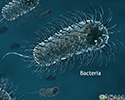
Bacteria - illustration
Bacterial infections can lead to the formation of pus, or to the spread of the bacteria in the blood.
Bacteria
illustration
-
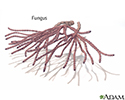
Fungus - illustration
Fungal infections are caused by microscopic organisms (fungi) that can live on the skin. They can live on the dead tissues of the hair, nails, and outer skin layers.
Fungus
illustration
-
Bacteria - illustration
Bacterial infections can lead to the formation of pus, or to the spread of the bacteria in the blood.
Bacteria
illustration
-
Fungus - illustration
Fungal infections are caused by microscopic organisms (fungi) that can live on the skin. They can live on the dead tissues of the hair, nails, and outer skin layers.
Fungus
illustration
-
Crohn disease - InDepth
(In-Depth)
Review Date: 11/10/2024
Reviewed By: Jatin M. Vyas, MD, PhD, Roy and Diana Vagelos Professor in Medicine, Columbia University Vagelos College of Physicians and Surgeons, Division of Infectious Diseases, Department of Medicine, New York, NY. Also reviewed by David C. Dugdale, MD, Medical Director, Brenda Conaway, Editorial Director, and the A.D.A.M. Editorial team.
 All rights reserved.