

Slipped capital femoral epiphysis
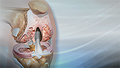
Femoral epiphysis - slippedA slipped capital femoral epiphysis is a separation of the ball of the hip joint from the thigh bone (femur) at the upper growing end (growth plate) of the bone.
-
Causes
A slipped capital femoral epiphysis may affect both hips.
An epiphysis is an area at the end of a long bone. It is separated from the main part of the bone by the growth plate. In this condition, the problem occurs in the upper area while the bone is still growing.
Slipped capital femoral epiphysis occurs in about 2 out of every 100,000 children. It is more common in:
- Growing children ages 11 to 15, especially boys
- Children who are obese
- Children who are growing rapidly
Children with hormone imbalances, such as hypothyroidism, caused by other conditions are at higher risk for this disorder.
-
Symptoms
Symptoms include:
- Difficulty walking, walking with a limp that came on quickly with or without trauma
- Knee pain
- Hip pain
- Hip stiffness
- Outward-turning leg
- Restricted hip movements


-
Exams and Tests
The health care provider will examine you. A hip or pelvis x-ray can confirm this condition.

-
Treatment
Surgery to stabilize the bone with pins or screws will prevent the ball of the hip joint from slipping or moving out of place. At times, the hip joint has to be opened up to allow the surgeon to realign the hip. Some surgeons may suggest using pins on the other hip at the same time. This is because many children will develop this problem in that hip later.
-
Outlook (Prognosis)
The outcome is most often good with treatment. In rare cases, the hip joint may wear away, despite prompt diagnosis and treatment.
-
Possible Complications
This disorder is linked to a greater risk for osteoarthritis later in life. Other potential but rare complications include reduced blood flow to the hip joint and wearing away of hip joint tissue (avascular necrosis). This can lead to increased pain and stiffness of the joint, even at a young age.
-
When to Contact a Medical Professional
If your child has ongoing pain or other symptoms of this disorder, have them lie down right away and stay still until you get medical help.
-
Prevention
Weight control for obese children may be helpful. Many cases are not preventable.
References
Sankar WN, Winell JJ, Horn BD, Wells L. The hip. In: Kliegman RM, St. Geme JW, Blum NJ, et al, eds. Nelson Textbook of Pediatrics. 22nd ed. Philadelphia, PA: Elsevier; 2025:chap 719.
Sawyer JR, Spence DD. Fractures and dislocations in children. In: Azar FM, Beaty JH, eds. Campbell's Operative Orthopaedics. 14th ed. Philadelphia, PA: Elsevier; 2021:chap 36.
