

Chancroid
Soft chancre; Ulcus molle; Sexually transmitted disease - chancroid; STD - chancroid; Sexually transmitted infection - chancroid; STI - chancroidChancroid is a bacterial infection that is spread through sexual contact.
Causes
Chancroid is caused by a bacterium called Haemophilus ducreyi.
The infection is found in many parts of the world, such as Africa and southwest Asia. The infection is uncommon in the United States. Most people in the United States who are diagnosed with chancroid get it outside the country in areas where the infection is more common.
Symptoms
Within 1 day to 2 weeks after becoming infected, a person will get a small bump on the genitals. The bump becomes an ulcer within a day after it first appears. The ulcer:
Ulcer
An ulcer is a crater-like sore on the skin or mucous membrane. Ulcers form when the top layers of skin or tissue have been removed. They can occur ...

- Ranges in size from 1/8 to 2 inches (in) or 3 to 5 centimeters (cm) in diameter
- Is painful
- Is soft
- Has sharply defined borders
- Has a base that is covered with a gray or yellowish-gray material
- Has a base that bleeds easily if it is bumped or scraped
About one half of infected men have only a single ulcer. Women often have 4 or more ulcers. The ulcers appear in specific locations.
Common locations in men are:
- Foreskin
- Groove behind the head of the penis
- Shaft of the penis
- Head of the penis
- Opening of the penis
-
Scrotum
Scrotum
The scrotum is a part of a male's body that is located below the penis. The scrotum is the sac (pouch) that contains the testes, epididymis, and the...
 ImageRead Article Now Book Mark Article
In women, the most common location for ulcers is the outer lips of the vagina (labia majora). "Kissing ulcers" may develop. Kissing ulcers are those that occur on opposite surfaces of the labia.
Ulcers also may form on the:
- Inner vagina lips (labia minora)
- Area between the genitals and the anus (perineal area)
- Inner thighs
The most common symptoms in women are pain with urination and intercourse.
The ulcer may look like the sore of primary syphilis (chancre).
Primary syphilis
Syphilis is a bacterial infection that is most often spread through sexual contact.

About one half of the people who are infected with chancroid develop enlarged lymph nodes in the groin.
In one half of the people who have swelling of the groin lymph nodes, the nodes break through the skin and cause draining abscesses. The swollen lymph nodes and abscesses are also called buboes.
Abscesses
An abscess is a collection of pus in any part of the body. In most cases, the area around an abscess is swollen and inflamed.

Swollen lymph nodes
Lymph nodes are present throughout your body. They are an important part of your immune system. Lymph nodes help your body recognize and fight germ...

Exams and Tests
Your health care provider diagnoses chancroid by:
- Looking at the ulcer(s)
- Checking for swollen lymph nodes
- Testing for other sexually transmitted infections (STIs)
There is no blood test for chancroid.
Treatment
The infection is treated with antibiotics, including ceftriaxone and azithromycin. Large lymph node swellings may need to be drained, either with a needle or local surgery.
Outlook (Prognosis)
Chancroid can get better on its own. Some people have months of painful ulcers and drainage. Antibiotic treatment often clears up the lesions quickly with very little scarring.
Possible Complications
Complications include urethral fistulas and scars on the foreskin of the penis in uncircumcised males. People with chancroid should also be checked for other sexually transmitted infections, including but not limited to syphilis, HIV, and genital herpes.
Fistulas
A fistula is an abnormal connection between two body parts, such as an organ or blood vessel and another structure. Fistulas are usually the result ...

Penis
The penis is the male organ used for urination and sexual intercourse. The penis is located above the scrotum. It is made of spongy tissue and bloo...
HIV
Human immunodeficiency virus (HIV) is the virus that causes acquired immunodeficiency syndrome (AIDS). When a person becomes infected with HIV, the ...

Genital herpes
Genital herpes is a sexually transmitted infection. It is caused by the herpes simplex virus (HSV). This article focuses on HSV type 2 infection....
Read Article Now Book Mark ArticleIn people with HIV, chancroid may take much longer to heal.
When to Contact a Medical Professional
Contact your provider for an appointment if:
- You have symptoms of chancroid.
- You have had sexual contact with a person who you know has an STI.
- You have engaged in high-risk sexual practices.
Prevention
Chancroid is spread by sexual contact with an infected person. Avoiding all forms of sexual activity is the only absolute way to prevent an STI.
However, safer sex behaviors may reduce your risk. The proper use of condoms, either the male or female type, greatly decreases the risk of catching an STI. You need to wear the condom from the beginning to the end of each sexual activity.
Safer sex behaviors
Safe sex means taking steps before and during sex that can prevent you from getting an infection, or from giving an infection to your partner. These...

Male
A condom is a thin cover worn on the penis during intercourse. Using a condom will help prevent:Female partners from becoming pregnant. Getting an i...

Female
The female condom is a device used for birth control. Like a male condom, it creates a barrier to prevent the sperm from getting to the egg....
References
Eckert LO, Lentz GM. Genital tract infections: vulva, vagina, cervix, toxic shock syndrome, endometritis, and salpingitis. In: Gershenson DM, Lentz GM, Valea FA, Lobo RA, eds. Comprehensive Gynecology. 8th ed. Philadelphia, PA: Elsevier; 2022:chap 23.
James WD. Bacterial infections. In: James WD, ed. Andrews' Diseases of the Skin. 14th ed. St Louis, MO: Elsevier; 2026:chap 12.
Riesbeck K. Haemophilus species, including H. influenzae and H. ducreyi (chancroid). In: Blaser MJ, Cohen JI, Holland SM, et al, eds. Mandell, Douglas, and Bennett's Principles and Practice of Infectious Diseases. 10th ed. Philadelphia, PA: Elsevier; 2026:chap 230.
Spinola SM. Chancroid. In: Goldman L, Cooney KA, eds. Goldman-Cecil Medicine. 27th ed. Philadelphia, PA: Elsevier; 2024:chap 276.
-
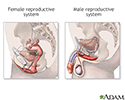
Male and female reproductive systems - illustration
The male and female reproductive systems, viewed from a mid-sagittal section.
Male and female reproductive systems
illustration
Review Date: 8/5/2025
Reviewed By: Jatin M. Vyas, MD, PhD, Roy and Diana Vagelos Professor in Medicine, Columbia University Vagelos College of Physicians and Surgeons, Division of Infectious Diseases, Department of Medicine, New York, NY. Also reviewed by David C. Dugdale, MD, Medical Director, Brenda Conaway, Editorial Director, and the A.D.A.M. Editorial team.
 All rights reserved.